After the Operation
You will wake up in recovery room with an oxygen mask and an IV in your arm. The nurses will give you medications for pain or nausea if needed. Then you will be transferred to the Day Stay unit until you are awake enough to go home.
Eating and Drinking
You can eat and drink anything after the operation. Don’t forget you just had an anesthetic so you might still feel a bit sleepy or nauseous. Use your judgement and increase your food intake as you tolerate it. There are no restrictions on the types of food you can eat. Make sure to drink plenty of water to help avoid constipation.
Moving Around
You should be able to walk around normally. You will be sore and likely need frequent rests in the first few days after surgery. Walking helps to prevent complications like pneumonia and blood clots.
Pain
You will be given a prescription for pain medication to take after surgery. You can also take Tylenol and Ibuprofen regularly to help reduce the need for stronger medications. Alternating between these two often provides really good pain control. Shoulder pain is normal. This is caused by the gas we use during surgery. It will usually go away after 24 hours.
- Ibuprofen 400mg every 8 hours
- Use caution if you have had ulcers in the past or kidney disease
- Do not use this medication if you are over the age of 70
- Tylenol (regular strength) 1-2 tablets every 4 hours if needed
- Prescription – Use if pain is severe after using tylenol and advil
Bowels
Pain medications can be very constipating. It is important to drink lots of water or fluids to help prevent this. Moving around will help as well. If your bowels haven’t worked in a few days after surgery you can pick up an over the counter stool softener at the pharmacy. Restoralax is a very good option
After gallbladder surgery it is quite normal for your stools to be a bit looser than usual. This will usually return to normal in a few weeks. On rare occasions can take several months to resolve. You may also notice that if you have a very greasy meal, your stools may be loose just following this.
Return to work and Sports
Most people will return to their regular activities within 2-3 weeks. You can return to work when you feel up to it. If you have a relatively sedentary job, you may feel well enough to return within 4-5 days. If you are involved in manual labor or heavy lifting, you will likely need up to 4 weeks off work to heal.
You may return to cardio activities such as walking, running, light yoga as soon as you feel ready. Avoid heavy lifting (over 10 lbs) for at least 4 weeks. This includes weight lifting, intense yoga and abs work. Any activity that requires flexing and tightening the core or straining should be avoided. This will give the best opportunity to prevent hernias.
Driving
You should not drive for 24 hours following a general anesthetic. If you are continuing to require pain medications you should also not drive. Before driving you should ensure that you could perform a full emergency stop, have the strength and capability to control the car, and be able to respond quickly to any situation.
Wound Care
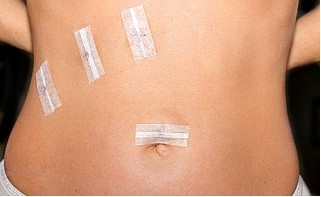
If you look at your wounds now, there is likely a big white bandage, and smaller strip tapes (called steri strips). Please keep your incisions dry for 48 hours. If there is a bigger white bandage, remove this just before your first shower. Leave the steri strips in place during your shower, pat the incisions dry. Soap and water are fine on your incision. You may put bandages back over the steristrips if you wish, but you do not need to. You can remove the steristrips in 7 days. If they fall off earlier, that’s fine. Your incision is closed with dissolvable stitches underneath the skin as well. Please avoid a bath/pool/hot tub – or anything where you will soak in water, for at least a week. Bruising around the wounds is normal.
 StCatharines General Surgery Clinic